
Why Starlink Mini Matters in 2025
The internet has become as essential as clean water and electricity. But what happens when you’re camping in Mississippi’s Delta wilderness, road-tripping through the Rockies, or living in a rural farm community where broadband still doesn’t reach? That’s where Starlink Mini Review 2025 comes in.
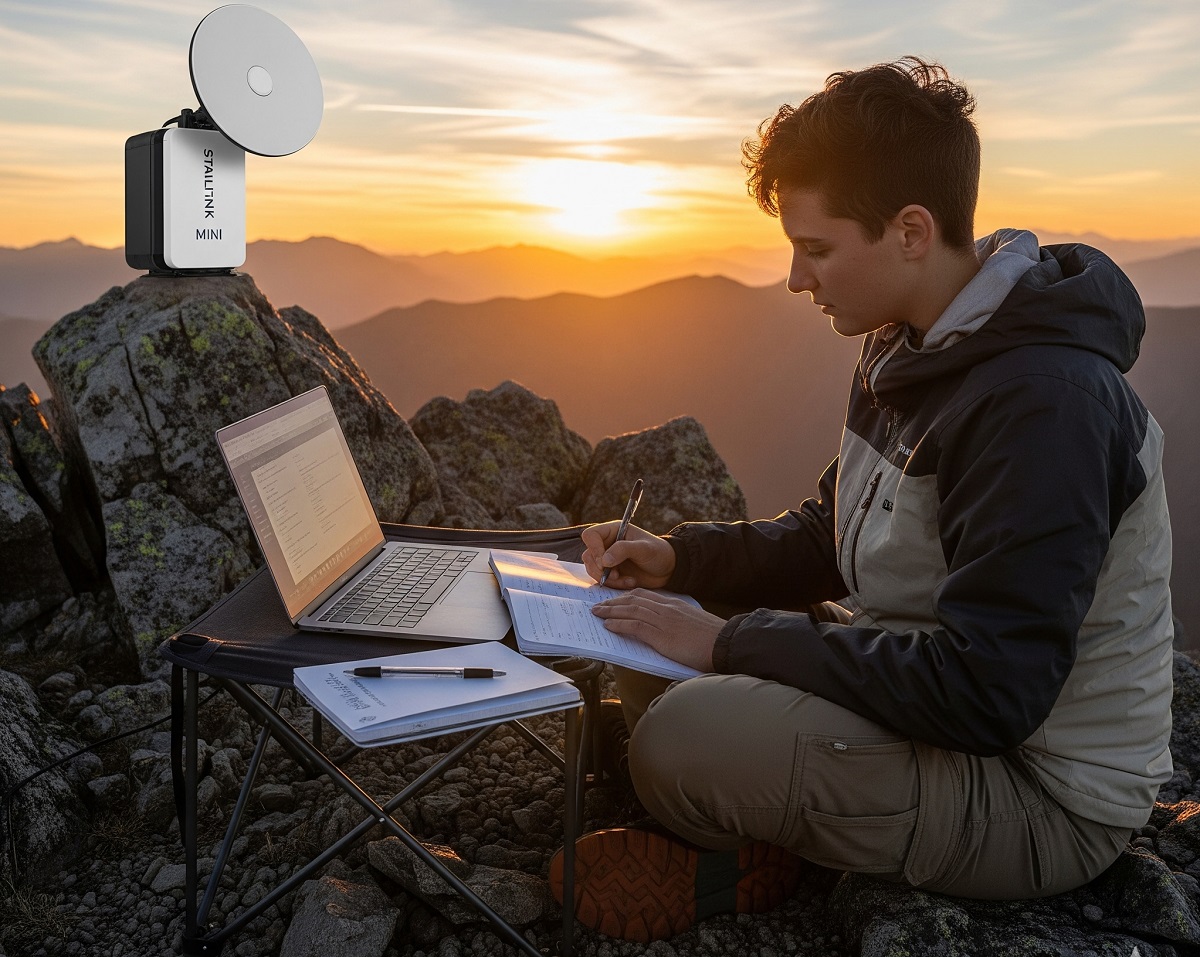
Launched in 2024 and expanding globally in 2025, Starlink Mini is Elon Musk’s attempt to shrink the satellite dish into something you can toss into a backpack. At just 2.5 pounds and the size of a laptop, it promises true portability with decent speeds—50 to 150 Mbps—anywhere with a clear sky view.
It’s designed for digital nomads, RV travelers, remote workers, and emergency responders who need internet without relying on fragile cell towers. In theory, it’s the perfect fix. But is it really worth the $599 hardware price plus $30/month (and up) for service?
Let’s break it down by looking at real customer experiences, actual performance data, and the pain points no one else is addressing.
Customer Pain Points: What Early Users Are Really Saying
Every new technology comes with growing pains, and Starlink Mini is no exception. While the press headlines highlight its “backpack internet,” real customers bring up issues that you won’t see on glossy marketing pages.
Data Caps & Hidden Costs
One of the biggest frustrations is the 50GB data cap on the Mini Roam plan. While Starlink advertises “global internet in your backpack,” the fine print limits you to 50GB/month, after which extra data costs $1 per GB.
For light browsing and emails, 50GB might last. But for streaming, video calls, or uploading large files, that cap disappears fast. A single Netflix 4K movie can eat 7GB. Remote workers using Zoom daily can burn through 20GB in a week.
Power Limitations in the Field
The Starlink Mini is power efficient (20–40W), but users report frustration with keeping it running off-grid. It doesn’t come with a battery—just an AC adapter and a barrel-jack cable. To run it on the go, you need a USB-C PD battery rated 100W. Not every battery supports that, and many cheaper ones fail.
Worse, if you don’t use the official Starlink cable, you lose waterproofing and features like LED power indicators. This adds hidden accessory costs many weren’t prepared for.
International Roaming Confusion
Starlink Mini is marketed as global, but the reality is complex. U.S. Mini plans currently require a standard Starlink subscription first, and Mini Roam is only available by invitation in select regions. Travelers trying to use it abroad often face restrictions, data throttling, or sudden disconnections.
Reddit threads are full of people asking:
- “Can I use my U.S. Mini in Europe?”
- “Do I need a separate Mini subscription when I travel?”
- “Why does my service stop when I cross borders?”
Clear guidance from Starlink is lacking, leaving early adopters frustrated.
Durability & Mounting Issues
Another overlooked pain point is mounting and protection. Starlink Mini is portable but not rugged by default. Campers and RVers want to mount it securely on vehicles or withstand rainstorms, but official mounting kits are limited. Some users hack together DIY setups, while others worry about leaving the device exposed.
Starlink Mini Review 2025
Specifications & Design
On paper, Starlink Mini looks like a game-changer. Let’s unpack what the specs actually mean in practice.
- Size & Weight: 11.75 × 10.2 × 1.45 inches, 2.4–2.5 lbs. Fits in a standard laptop bag.
- Power Consumption: 20–40W (compared to 50–75W for standard Starlink).
- Ports: Barrel jack for power input, Ethernet via adapter (sold separately).
- Accessories: Comes with AC adapter & cable, but no included battery.
- Durability: IP67-rated when used with official cables—meaning dustproof and water-resistant.
Pros & Cons
Pros
- Extremely portable, finally delivering “backpack internet.”
- Power-efficient compared to older dishes.
- Can run on solar, vehicle batteries, or portable power stations.
Cons
- Accessory-dependent (official cables, batteries add cost).
- No built-in stand or rugged case for outdoor mounting.
- Limited native ports—Ethernet requires buying extras.
In short: Starlink Mini is cleverly designed for portability, but its ecosystem feels half-baked—forcing users to buy extras for real-world use.
Real-World Starlink Mini Performance Review 2025
The big question: How fast is it really?
Download & Upload Speeds
Independent testers report:
- Download: 50–150 Mbps (depending on location & sky visibility)
- Upload: 10–30 Mbps
- Latency: 23–50 ms
That’s fast enough for 4K streaming, large file transfers, and gaming in many cases.
Gaming & Video Calls
Gamers say latency is acceptable for most online games, though not as stable as fiber. Video calls generally work smoothly, but brief drops can happen if satellites shift or obstructions appear.
Streaming & Entertainment
Streaming works fine, but heavy use eats through the 50GB cap quickly. After that, $1/GB fees make binge-watching very expensive.
Reliability in Remote Areas
Performance shines where cell networks fail—deep forests, desert camps, rural farmland. But it struggles under tree cover or in dense cityscapes with tall buildings. Clear skies are non-negotiable.
Verdict: Starlink Mini delivers strong performance for a portable satellite system, but with trade-offs in consistency and affordability.
Power Planning: Can Starlink Mini Run Off-Grid Reliably?
One of the most overlooked aspects of Starlink Mini is power planning. The device is efficient, but users need the right setup to make it viable for long trips.
Battery Requirements
- Needs 100W USB-C PD battery for portable use.
- Most “standard” power banks won’t cut it.
- Recommended capacity: 20,000–40,000 mAh for a full day’s use.
Runtime Expectations
- At ~30W average draw, a 100Wh battery provides about 3 hours of runtime.
- With solar recharging (100–200W panels), users can extend operation indefinitely.
Solar & Vehicle Power Setups
RVers and campers often pair Starlink Mini with:
- Portable solar generators (Jackery, EcoFlow, Bluetti).
- Vehicle DC-AC inverters.
- Custom solar panels for off-grid cabins.
Challenges
- Must manage power carefully—can’t just leave it running all day.
- Carrying multiple large batteries reduces “backpack portability.”
- Official accessories (like cables and mounts) raise costs further.
Takeaway: Starlink Mini is viable off-grid, but only if you plan your power budget. Without the right setup, you’ll be left staring at a dead dish halfway through a trip.
International Roaming Explained
Starlink markets the Mini as “global internet in your backpack,” but the reality is far less straightforward.
Regional Restrictions
Currently, U.S. customers need an existing Starlink subscription to add Mini Roam for $30/month with a 50GB data cap. International roaming is possible, but:
- The Mini may not work in countries where Starlink is not yet licensed.
- Some users report sudden service shutdowns when crossing borders.
- LatAm models sometimes offer unlimited plans, while U.S. versions don’t.
Plan Confusion
Customers often ask:
- Do I need a separate Mini subscription if I already have Starlink RV or Residential?
- Can I switch my service address while traveling?
- Why does my Mini stop working after a few days abroad?
The answer varies by region, and Starlink’s documentation is vague. Many buyers find themselves stuck in Reddit forums, trying to piece together answers from other users.
What Needs to Improve
A clear global coverage map and plan comparison would solve 90% of these complaints. Until then, traveling users must be ready for trial and error.
Durability & Mounting Solutions
For a device designed to live outdoors, Starlink Mini has limited ruggedness out of the box.
Durability Concerns
- Rated IP67 when using official cables, but not when third-party cables are used.
- No included stand or protective case.
- Susceptible to tipping in high winds if propped on uneven surfaces.
Mounting Solutions
Since SpaceX hasn’t released robust mounting kits, users have created DIY hacks:
- Tripod camera mounts: Lightweight, portable, but not stable in wind.
- Magnetic RV mounts: Popular among overlanders for quick roof setup.
- Custom 3D-printed cases: Protect the dish and allow better airflow.
User Stories
One Mississippi camper reported:
“The dish works great by the river, but one gust of wind knocked it over into the mud. I had to clean the whole thing.”
Takeaway: Starlink Mini can be rugged, but only with user creativity and third-party gear. Official kits are badly needed.
Environmental & Ethical Considerations
A controversial side of Starlink Mini is its impact on the wilderness experience.
Wilderness Connectivity
Many adventurers love being connected while camping. But critics argue constant connectivity ruins the essence of “unplugging.” A solo hiker in the Appalachians doesn’t experience the same solitude when work emails are still pinging in.
Space Debris & Light Pollution
Astronomers warn that more Starlink satellites—thousands already orbiting—add to space debris risks and light pollution, potentially disrupting stargazing and astronomy research.
Carbon Footprint
While the Mini consumes little power itself, the satellite launches required to keep Starlink running raise questions about sustainability.
Balanced View:
- For emergency responders and rural students, Starlink Mini is a lifeline.
- For wilderness purists, it represents the digital creep into the last offline spaces.
Data Use vs. Cost Calculator
One overlooked but critical part of Starlink Mini is data budgeting. With a 50GB cap, costs add up quickly.
What 50GB Really Gets You
- Web browsing & email: ~400–600 hours/month.
- Zoom calls: ~2GB/hour → ~25 hours/month.
- Netflix HD streaming: ~3GB/hour → ~16 hours/month.
- Netflix 4K streaming: ~7GB/hour → ~7 hours/month.
- Gaming downloads (Steam, Xbox): One AAA game = 50–100GB → blows entire cap instantly.
Extra Costs
After 50GB, you pay $1 per GB. Meaning:
- 20 hours of Zoom extra = $40.
- 10 extra movies = $70.
- A single Call of Duty update = $100.
Customer Pain
Many users say they were blindsided by how quickly 50GB disappears. Heavy users often spend $100–200/month—defeating the “budget-friendly” marketing.
Comparison with Alternatives
So how does Starlink Mini compare to other portable internet options?
| Feature | Starlink Mini | Starlink Standard Dish (Roam) | 5G Mobile Hotspot | Starlink RV / In-Motion |
|---|---|---|---|---|
| Portability | Backpack-sized | Bulky, not backpackable | Pocket-sized | Vehicle-mounted |
| Speeds | 50–150 Mbps | 100–250 Mbps | 20–200 Mbps | 100–250 Mbps |
| Latency | 23–50 ms | 20–40 ms | 30–60 ms | 20–40 ms |
| Data Cap | 50GB (+$1/GB) | Varies (unlimited in some regions) | 50–200GB (provider-limited) | Unlimited (priority tiers) |
| Power Use | 20–40W | 50–75W | 5–10W | 50–100W |
| Price | $599 + $30/mo | $599 + $150/mo | $200–400 + $60–100/mo | $2,500+ + $150/mo |
| Best For | Backpackers, campers, emergency backup | Full-time RVers, off-grid homes | Urban & suburban travel | Full-time vanlifers, high-end RVs |
Verdict:
- If you want true backpack portability, Starlink Mini is unmatched.
- If you need unlimited data or long-term RV use, the standard Starlink Roam dish is better.
- If you travel in areas with strong cell coverage, a 5G hotspot may be cheaper and simpler.
Long-Term Performance & Reliability
Early reviews highlight impressive speeds, but the real question is: how does Starlink Mini perform over months of use?
Performance Stability
- In rural Mississippi, users report speeds starting at 120 Mbps but dropping to 60–80 Mbps during peak evening hours.
- Latency fluctuates between 25–50 ms, sometimes spiking during storms or when satellites hand off connections.
Hardware Durability
- The plastic casing holds up to normal travel, but multiple users complain about scratches and dust buildup after just a few trips.
- Long-term exposure to sun and rain is risky without protective covers.
Service Consistency
- Starlink pushes frequent firmware updates, which improve performance but sometimes cause temporary outages.
- Some Mini users found service randomly suspended due to “region not supported,” showing licensing issues remain unresolved.
Takeaway: Starlink Mini is reliable for short trips and emergencies, but frequent travelers may find inconsistencies frustrating without backup internet.
Accessories & Hacks for Better Experience
Because the official kit is minimal, users rely on add-ons and hacks to make the Mini practical.
Must-Have Accessories
- USB-C PD 100W Battery Pack (20,000–40,000 mAh) – provides 2–5 hours of runtime.
- Portable Solar Panel (100–200W) – keeps the system running indefinitely while camping.
- Protective Hard Case – prevents scratches and makes packing safer.
- Tripod Stand / RV Mounts – keeps dish stable in windy conditions.
Popular DIY Hacks
- 3D-printed mounts to secure the dish on RV roofs.
- Weatherproof enclosures built from storage boxes.
- Ethernet adapters for stable connections to routers and mesh systems.
- Battery chaining with multiple USB-C packs for extended runtime.
Community Insight
On Reddit, many overlanders share their custom setups. Some even power the Mini off their truck alternators or integrate it into van solar systems.
Verdict: To unlock Starlink Mini’s full potential, you’ll need $200–500 in extra gear.
Starlink Mini Troubleshooting
Even seasoned users hit roadblocks with Starlink Mini. Here are the top issues and fixes.
a) No Signal
- Check for obstructions in the app.
- Move to a clearer sky view.
- Reset dish by unplugging for 30 seconds.
b) Power Issues
- Verify USB-C PD battery is 100W-rated.
- Ensure correct cable—non-official ones may block power.
c) Random Disconnects
- Could be roaming restrictions in your current country.
- Try updating firmware in the Starlink app.
d) Data Over Cap
- Monitor usage in the app.
- Switch to low-data activities (emails, browsing) when nearing 50GB.
- Consider bonding with a mobile hotspot to offload heavy tasks.
e) Overheating
- Keep dish elevated for airflow.
- Avoid leaving it in direct sun for long periods.
FAQs (Starlink Mini Edition)
Q1: Can Starlink Mini replace home internet?
Not really. With a 50GB cap, it’s best for travel, camping, and emergencies—not full-time use.
Q2: Can I use Starlink Mini while moving (RV, car)?
Officially no—it requires a stable position. Some users jury-rig mounts, but expect frequent drops.
Q3: How many devices can connect?
Up to 128 devices via Wi-Fi 6, though speed is shared.
Q4: Is Starlink Mini waterproof?
Yes, IP67-rated only with official cables. DIY solutions may compromise that rating.
Q5: Will it work internationally?
Yes, but only in licensed countries. Coverage is expanding, but expect gaps.
Final Verdict: Who Should Buy Starlink Mini?
The Starlink Mini is a groundbreaking device—shrinking satellite internet into a truly portable form. But it’s not a one-size-fits-all solution.
Best For:
- Campers, backpackers, and overlanders in remote areas.
- Emergency responders needing quick-deploy internet.
- Remote workers who occasionally need backup service.
Not Ideal For:
- Heavy streamers and gamers (data cap kills value).
- Full-time RVers (better off with Starlink Roam/Standard).
- Budget-conscious users (hidden costs add up).
Our Rating: 7.5/10
- Portability: ★★★★★
- Performance: ★★★★☆
- Ease of Use: ★★★★☆
- Value for Money: ★★★☆☆
- Durability & Accessories: ★★★☆☆
Final Word: If you want internet in your backpack, Starlink Mini is unmatched. But be prepared for data caps, power challenges, and extra costs.
Is Starlink Mini Worth It in 2025?
The Starlink Mini is undeniably a milestone in portable connectivity. For the first time, you can throw a satellite dish into a backpack and carry 50–150 Mbps internet with you into the woods, deserts, or farmlands of Mississippi—or anywhere else with a clear sky.
But like any new tech, it’s not perfect. Its strengths—lightweight design, power efficiency, and solid speeds—are balanced by frustrations like the 50GB data cap, confusing roaming policies, accessory costs, and durability concerns.
For digital nomads, campers, RV adventurers, and emergency workers, the Mini can be a lifesaver. It keeps you connected when cell towers fail and traditional broadband doesn’t exist. However, for heavy internet users, gamers, or those wanting a home replacement, it falls short—both in capacity and in cost-efficiency.
Ultimately, the Starlink Mini is best seen as a specialized tool. It’s not the cheapest way to get internet, and it’s not the fastest, but it is the most portable and versatile satellite solution available today.
If staying connected while going off-grid is critical, the Starlink Mini is worth it. If you just want casual connectivity, a 5G hotspot may serve you better.
Extended FAQs
Q1: Can Starlink Mini be used during hurricanes or disasters in Mississippi?
Yes. In fact, one of its biggest advantages is being able to run on a portable battery or solar panel when power grids are down. Emergency crews are already testing it as a backup communication system.
Q2: How much does it really cost monthly?
At a minimum: $30/month for 50GB. But heavy users often hit $100–200 with extra data. Expect hidden costs from batteries, cables, and mounts.
Q3: Can it run off a car battery?
Yes—with the right inverter or DC adapter. Many RVers wire it directly into their solar or vehicle power systems.
Q4: Does Starlink Mini support VPNs for remote work?
Yes, VPNs work fine. Latency may cause slight lag compared to fiber, but it’s still better than most rural cellular internet.
Q5: Will the Mini get better in the future?
Likely. SpaceX is expanding satellite coverage and may introduce higher data tiers or new hardware. Expect updates over the next year.
Final Thoughts
The Starlink Mini is the closest thing we’ve seen to true backpack internet. It delivers what no cell tower or traditional ISP can: connectivity anywhere with open skies.
But it comes with strings attached: data caps, roaming headaches, power planning, and accessory costs. Buyers must enter with realistic expectations.
If you’re an adventurer, traveler, or emergency planner, the Starlink Mini is worth every penny. If you’re a binge-watcher or heavy gamer, look elsewhere.